
What is a cap table?
A cap table (capitalization table) lists who owns your startup: shares, options, SAFEs and the option pool. What goes in it, a worked example and common mistakes.

What is a SAFE?
A SAFE (simple agreement for future equity) lets a startup raise money now and issue shares later. Post-money SAFEs, valuation caps, discounts and a worked example.
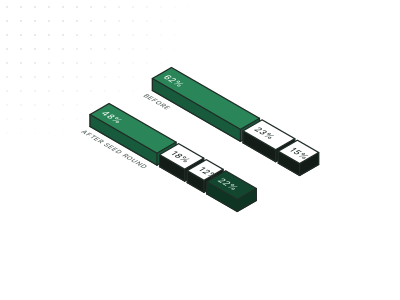
Fully diluted shares
Fully diluted shares count every share that exists or could exist: options, the whole option pool, warrants. How to calculate it, an example and common mistakes.
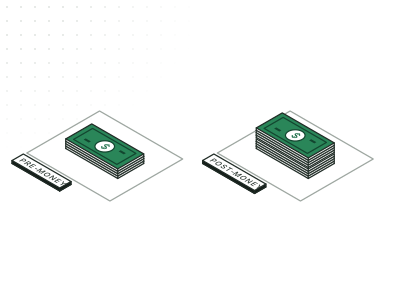
Pre-money vs post-money valuation
Pre-money is what your company is worth before new money comes in; post-money is after. The formula, a worked seed round example and the mistakes founders make.
SAFE valuation cap and discount
How a SAFE's valuation cap and discount decide how many shares the investor gets. The math, a worked example with three SAFEs, and which one wins.
Option pool and ESOP
An option pool (often called an ESOP) is the block of shares a startup sets aside for employee options. How it works, how big it should be, and a worked example.

Vesting schedules and cliffs
How a 4-year vesting schedule with a 1-year cliff works, what happens when someone leaves, acceleration, and a month-by-month example for an employee and founders.

The 83(b) election
An 83(b) election lets you pay tax on restricted stock when you receive it instead of as it vests. Who should file, the 30-day deadline, how to file and an example.
What is a 409A valuation?
A 409A valuation is an independent appraisal of your common stock, used to set option strike prices. When you need one, how long it lasts, and what goes wrong without it.
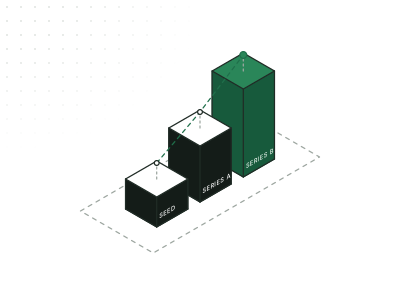
Share dilution
Share dilution is the drop in your ownership when a company issues new shares. How it works, a worked example through SAFEs and a seed round, and how to plan.
ISO vs NSO stock options
ISOs and NSOs differ in who can get them and how they are taxed. The ISO rules, the $100k limit, the 3-month rule after leaving, and a worked example.
Liquidation preference
A liquidation preference decides who gets paid first when a startup is sold. 1x non-participating, participating preferred, seniority and a worked exit example.
Not legal or tax advice. Spotted a mistake? Tell us on GitHub.